For nearly two decades, my job was to make a room sound right. Somewhere in the last few, it became about making the room feel seen.
That’s the shortest way I can explain an audio-visual set. It’s the difference between hearing “Jhoome Jo Pathaan” and watching the wall behind the booth ignite with it — the exact frame landing on the exact drop, the whole floor turning to look at the same moment at the same time. Sound moves a body. Sound plus picture moves a room together.
Sound used to be enough. It isn’t anymore.
A few years ago, a big Bollywood song carried the floor on its own. It still does — but the bar has moved. The nights people actually talk about now, the ones that end up on everyone’s Instagram the next morning, have a visual layer working in lockstep with the audio. Not lights flickering vaguely to a beat. Not a logo loop on a screen nobody looks at. The song’s own world — the film, the colour, the frame — cut live to the music as it plays.
I built my sets around this because Bangalore’s crowds are some of the most visually literate in the country. They know the films. They know the exact second the beat drops in a song they’ve heard a thousand times. When the screen hits that second with them, the reaction is different in kind, not degree.
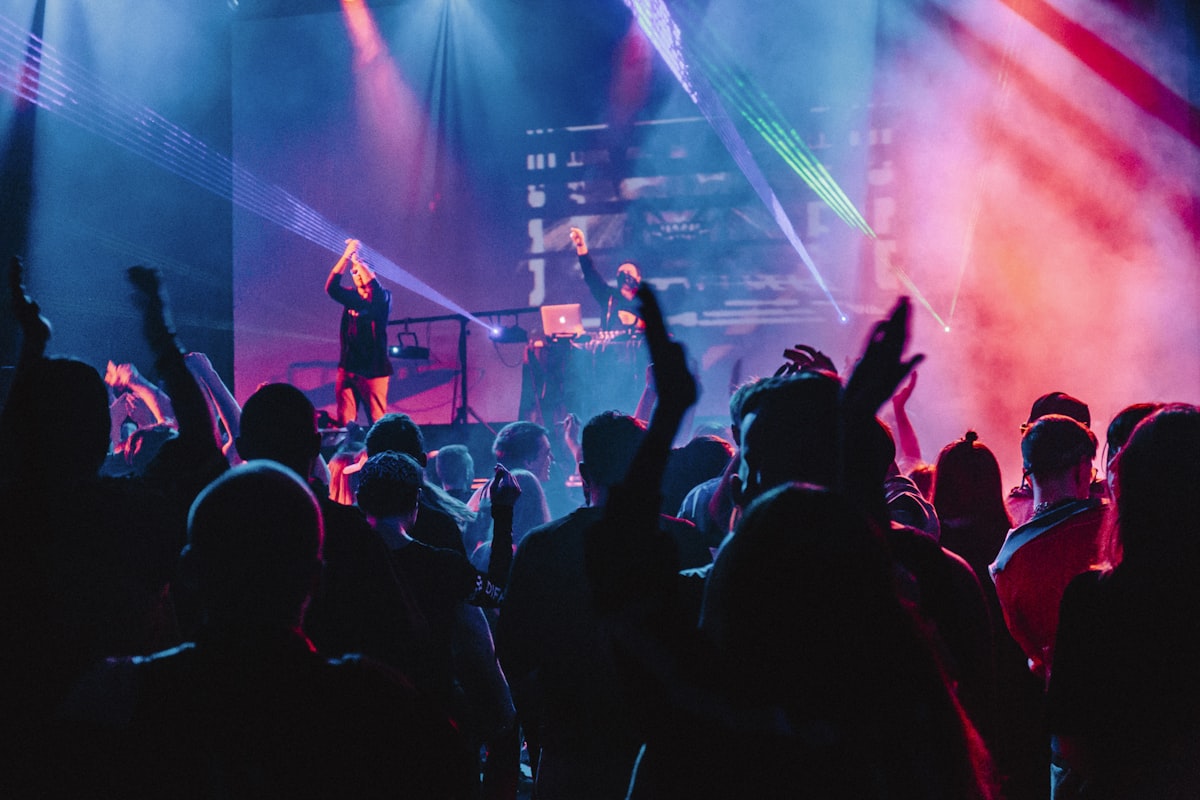
An audio-visual set, defined
An audio-visual set — a “video set” — is a set where the visuals are mixed live, as a second instrument, alongside the music. The screens are cut to the track in real time. What you see is driven by what you hear, moment to moment, decided on the night. For the full breakdown — how it differs from a VJ, what a venue needs, and what it costs — see the Audio-Visual DJ guide.
People assume it’s a video playing in the background. It’s the opposite. The video is being performed — mixed, cut, and timed to the drop exactly the way the audio is. If the crowd takes a song somewhere I didn’t expect, the screen goes there with them. A pre-rendered clip can’t do that. A live visual mix can.
Three things separate a real audio-visual set from a screen with something on it:
- It’s synced to the drop, not the runtime. The visual hit lands on the beat, every time, because it’s being triggered live — not playing on its own clock.
- It’s mixed, not looped. It follows the crowd exactly like the music does. No fixed running order, because no floor follows one.
- It serves the song, not the DJ. The screen is there to make the track bigger, not to advertise the booth.
Bollywood was built for this
Here’s the part most people miss: Bollywood is the one music culture on earth where nearly every song is already a visual. Each track is a scene from a film — a moment, a set piece, a face the whole room recognises. The visual doesn’t have to be invented. It’s waiting in the source.
Play a Western club record and you’re inventing visuals to go with it. Play a Bollywood anthem and the visual is the film moment everyone in the room already has in their head — you’re just putting it back on the wall, in sync, at scale. That’s why the audio-visual format hits harder with this catalogue than almost any other. The material was cinematic before it was ever a dancefloor track.
This is also why I mix Bollywood against global records rather than replacing it. The Hindi song brings the shared memory and the visual; the global record brings the modern edge. On screen and on the floor, that blend is the signature — familiar enough to sing, fresh enough to feel new.
Where an audio-visual set belongs
The format flexes to the room. Three places it consistently changes the night:
Weddings. A sangeet or reception is already emotional and already about specific songs. Putting the film moment on screen as the couple’s chosen track plays turns a good floor into something they’ll replay for years. It’s the single biggest upgrade you can make to a wedding dancefloor that already has good music.
Clubs. This is the home of the format — a full Bollywood audio-visual night, mixed live. It’s exactly what I do at Chamatkar, and what’s coming to No Limmits with Filmy Fridays. One long peak, the screen married to every drop.
Corporate. For an annual day, product launch, or brand night, the visual layer is where branding and music finally meet — the company’s world on screen, the room’s energy on the floor, both timed to the same beat.

The hard part isn’t the screen. It’s the timing.
Anyone can put a video on a wall. The craft is that the visual has to be earned by the same read of the room that drives the music. I’m reading the floor, choosing the next track, and choosing what the room sees — all in the same half-second. When it’s right, nobody notices the mechanics. They just feel that the night is somehow bigger than the songs alone should make it.
That’s the whole discipline: the screen never leads, never distracts, and never runs on its own clock. It arrives exactly when the drop does, then gets out of the way.
What your venue needs to pull it off
You need less than people assume. Before you spend anything, here’s what actually matters:
Never rent the AV kit before someone who’ll actually run the visuals has seen the venue. The most common mistake is a beautiful screen in a room too bright to use it, or a panel too small for the floor. Sort the space first, the gear second.
What is an audio-visual DJ set?
It’s a set where the visuals are mixed live alongside the music — the screens behind the booth are cut to the track in real time, so the drop you hear lands with the frame you see. It’s not a slideshow or a pre-rendered video running in the background; it’s a second instrument the DJ plays at the same time as the music.
Do I need special equipment or screens for an audio-visual set?
You need a surface to throw visuals onto — an LED wall, a projector and screen, or the venue’s existing screens. Most Bangalore clubs and banquet venues already have something workable, and for weddings a single projector-and-screen or LED panel is enough. Tell me the venue and I’ll tell you exactly what it can support before you spend on anything.
Does an audio-visual set work for weddings, or just clubs?
Both, and it arguably lands harder at weddings. A sangeet or reception is already emotional and already about specific songs — putting the film moment on screen as the track plays turns a good floor into a memory. It works just as well for a club night or a corporate stage; the format flexes to the room.
Is the video pre-made or mixed live?
Mixed live. A pre-made video locks you into a fixed running order, and no wedding or club floor ever follows a fixed running order. Mixing the visuals live means the screen follows the crowd exactly like the music does — which is the entire point.