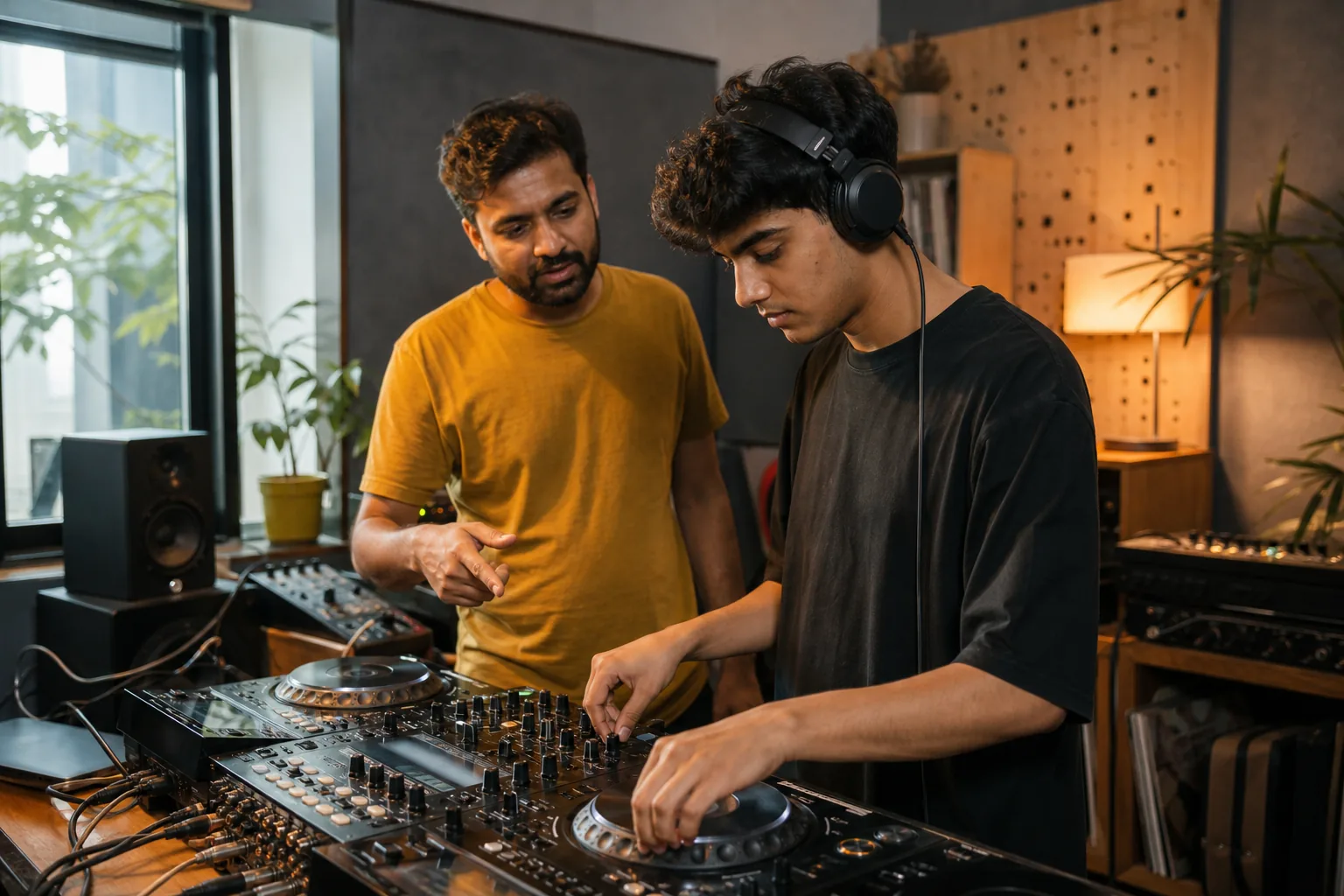
Want to learn DJing in Bangalore? The right course gives you time on real decks and clear feedback, not just a list of topics. Here’s what to check in the teaching, gear, practice plan and course format before you enrol.
What a DJ course in Bangalore can teach
A DJ course should teach you to control the music, not only operate buttons. Start by checking whether it covers the basics in a clear order. You’ll want to learn how tracks line up, how to move between them, and how to keep a set on track when a mix doesn’t go as planned.
Beat-matching is a key skill. It means bringing two tracks into time so they play together without clashing. Pitch bending lets you make small speed changes while mixing. A course should give you time to hear the difference, make the adjustment, and try again. Ask how much of each class is spent practising these skills yourself.
Equipment basics matter too. You should learn what the main controls do and how to use them with care. Ask whether lessons cover cue points, tempo controls, channel levels and EQ. EQ lets you shape low, middle and high parts of the sound. A teacher should explain what each change does to the mix, then let you practise it.
There’s also the music side. A strong learning plan makes room for phrasing, or spotting where one part of a track ends and another begins. It should help you choose tracks that make sense together, rather than relying only on similar tempo. Ask if the course includes set planning and listening skills, as well as technical drills.
Some learners want a hobby. Others hope to play at events. The course should match that aim. If you’re learning for personal enjoyment, you may want more time on basic mixing. If you hope to perform, ask how lessons build toward longer sets and live practice.
Key takeaway: Ask for the lesson outline and find out how much time you’ll spend mixing, listening and getting feedback.
From first transitions to building a set
Your first clean transition is a good start, but a set needs a sense of direction. A course can help you move from mixing two tracks to planning a sequence that holds a listener’s attention. Ask how the teacher helps students choose what to play next and what to do if a track doesn’t land as expected.
Set construction means shaping the order and feel of the music over time. You might begin with tracks that give people room to settle in, then build the pace as the setting allows. A course can teach you to group music by mood or energy, then shift between those groups with care. The aim is to make each change feel intentional.
For a wedding or a corporate event, the room may include people with different tastes and ages. That makes crowd reading part of the craft. You watch how people respond and adjust the music when the energy changes. Ask whether the course discusses reading a room, and whether students get to practise making choices during a live-style session.
Technical mixing still matters. A course may introduce transitions across different tempos, back-to-back sets or the use of effects. Don’t assume that a course covers every advanced skill just because it says “performance training.” Ask which techniques you’ll practise and what level of skill the teacher expects before you start.
One useful check is to ask how progress is assessed. Will you play a short set for the instructor? Will you get notes on timing, track choice and the way you recover from a mistake? Feedback should point to something you can try in your next practice session. Praise alone won’t show you what to work on.
If you’re interested in performance work, my own sets bring music and custom visuals together for events. That work is different from a course, but it shows why choices about flow and mood matter beyond the bedroom setup.
Equipment, Rekordbox and practice time
Ask what equipment you’ll use in class and how much time you’ll get on it. “Hands-on” can mean a short demonstration or a long stretch where you control the mix yourself. Find out whether each learner gets their own practice time, how sessions are set up, and whether you can repeat a task after the teacher has shown it.
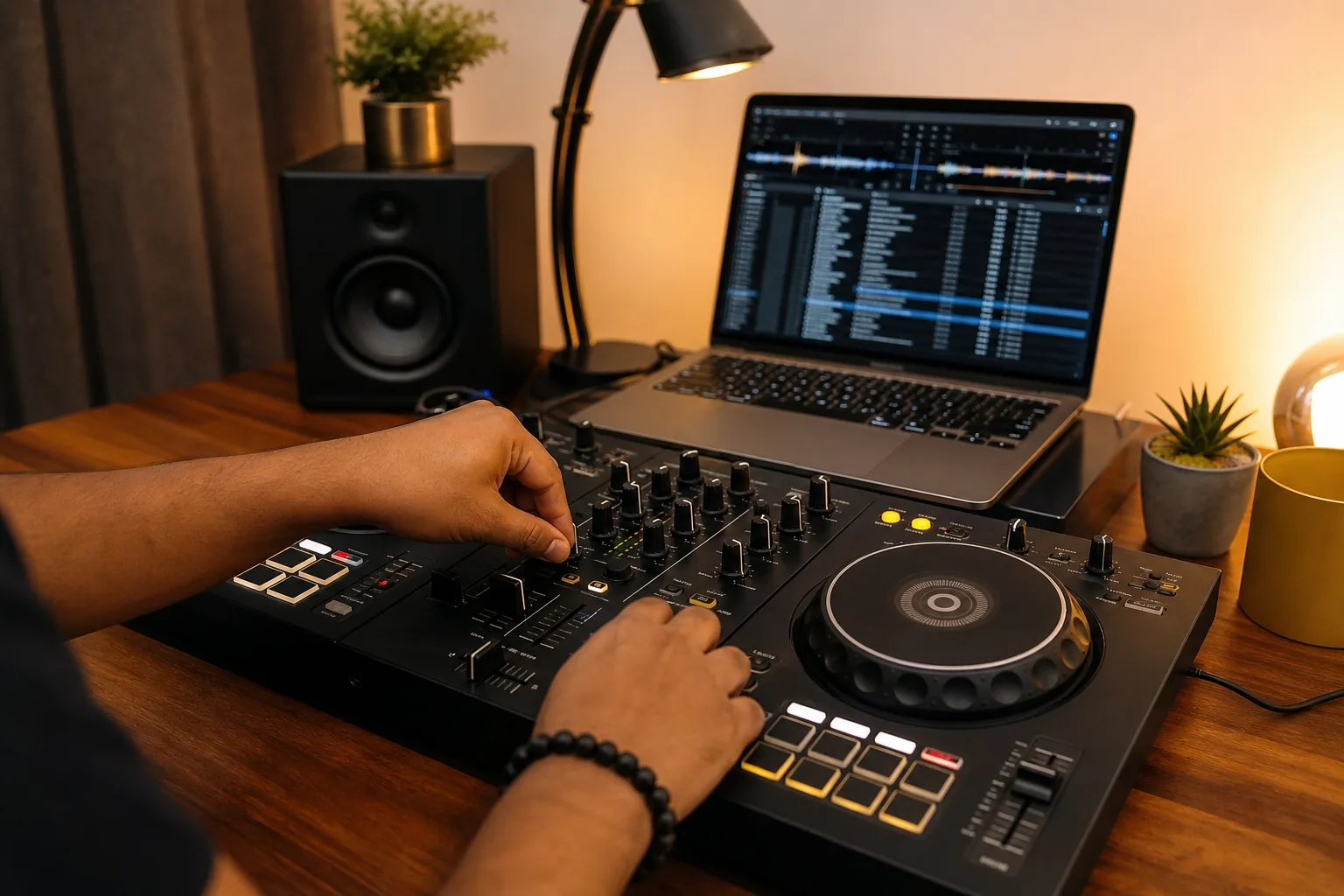
The hands-on training I run as DJ VIC uses the Pioneer Opus Quad with Rekordbox. That gives learners a specific setup to ask about before they begin. Check what you’ll do on the equipment: will you practise loading tracks, finding cue points, setting levels and moving between tracks? A named piece of gear is useful only when the lesson gives you time to use it.
Rekordbox is used to prepare and organise music for DJ sets. Ask whether training includes library preparation, track analysis and export to a drive, or focuses on mixing once the music is ready. These are separate parts of the workflow. If you’ll use your own laptop, find out what needs to be installed before the first class.
Also ask what happens outside class. Some courses may provide supervised practice time; others may expect you to practise on your own setup. Don’t buy equipment before you know what you’ll learn on and what the instructor suggests for your goals. If you already own gear, ask whether you can bring it in or use it during a lesson.
Software access is another point to settle early. Ask what version or setup the class uses, whether you need your own account, and whether any paid software is part of your costs. Then check that you can keep using the same workflow after the course. Learning on one setup and practising on another can take adjustment.
A simple practice log helps. After each session, note one thing that worked and one that needs another try. Keep the task small, such as matching two tracks or making a clean transition at a chosen point. That gives your next practice session a clear aim.
Pro tip: Before enrolling, ask to see the equipment and software you’ll use, then ask how much time you’ll spend practising without the instructor taking over.
Instructor experience, course format and what to clarify
The instructor’s background can shape what you learn. Ask how long they’ve been DJing and what kinds of sets they play. A working performer may be able to explain how they prepare for a set and adapt when a mix or room changes. Ask for a sample lesson plan so you can see how that experience turns into teaching.
I’m a Bengaluru-based DJ, producer and remixer. I’ve been in the industry since 2007 and have played more than 1,400 nights. My training is hands-on, using Pioneer Opus Quad and Rekordbox. Ask me which skills the training will cover and how they fit your starting level.
Course format can vary. Some learners prefer in-person lessons because they want to work on the decks with an instructor in the room. Others may be looking for online learning. Before you choose, ask how lessons are delivered and whether you’ll get live feedback while mixing. A recorded lesson can explain a control, but it can’t respond to the timing of your hands in the same way.
Clarify the schedule before you commit. Ask how long each session lasts, how often lessons take place, and whether you can change a session if your plans shift. If a course has a set end date, find out how missed classes are handled. These details matter when you’re balancing learning with work or study.
Ask if there’s a demo class or a chance to discuss your goals first. Use that time to describe what you can already do. A beginner needs a different starting point from someone who can beat-match but struggles to build a full set. You can also ask how the instructor gives feedback and what kind of practice they expect between sessions.
I also run private craft sessions for people who want focused work on reading a room. They are not a beginner’s course, so ask which format fits your level and aims.
Turning practice into a DJ pathway
Learning to mix is one part of playing in public. If you hope to take on gigs, ask whether the course discusses how to prepare for a performance and what a venue or event organiser may expect from you. You’ll need to think about music choice, timing and how to respond if the plan changes during the event.
Try to build a set that suits one clear setting before you plan for every kind of crowd. A set for a sangeet may need to leave room for family entries and planned performances. A corporate event may have speeches or awards before the dance floor opens. These are different music journeys, so practising how to plan around the event can help you make better choices.
I perform at weddings and corporate events across India and internationally. My event work combines curated music, original remixes and custom visuals tailored to each event. For a sense of how I plan the music for a celebration, see my sangeet performances. A learner should treat that as an example of event work, not as a promise that a course leads to a booking.
If you want to play at company events, learn to plan around the running order. Music may need to pause for a speech, then shift into a different mood after dinner. A corporate event DJ in Bangalore needs to respond to that flow while keeping an eye on the room. It’s useful to ask whether your training includes any discussion of event planning or focuses only on mixing technique.
Be careful with claims about career outcomes. Ask what support the course actually includes. Does it include feedback on a recorded set, help with a first performance, or guidance on music preparation? Get each point in clear terms. A certificate may mark course completion, but it doesn’t by itself show how well you can perform. Ask what the certificate means and who issues it.
Fees depend on the course scope and format. Ask for the full fee before you enrol, including any separate costs for software, equipment or extra practice time. Check the payment schedule and cancellation terms in writing. If a course mentions placement or gig support, ask what that support involves and whether it’s part of the course or a separate service.
Frequently asked questions
How long does it take to learn DJing?
It depends on what you want to learn and how often you practise. You can start with basic track matching and transitions, then build toward longer sets and live performance skills. Ask the instructor what a course covers, how many sessions it includes and what practice they expect between lessons. A course length alone can’t show how much time you’ll spend mixing.
Do I need to buy DJ equipment before I enrol?
No, you don’t need to buy equipment before you know what the course uses. Ask whether training includes access to decks and how much class time you’ll get on them. My hands-on training uses Pioneer Opus Quad with Rekordbox. If you already own equipment, ask whether your lessons can include practice on your own setup.
What should a beginner DJ course teach?
A beginner course should cover how to use the equipment, match tracks in time and make basic transitions. It should also explain phrasing and level control, then give you time to practise each skill. Ask whether you’ll get individual feedback and whether the course moves toward planning a short set. The lesson outline should make the path clear.
Does a DJ course include Rekordbox training?
Some courses focus on Rekordbox, while others may teach different workflows. Ask which software you’ll use and whether lessons cover music organisation as well as mixing. My training uses Rekordbox with Pioneer Opus Quad. Before enrolling, check whether you’ll need your own laptop, software access or music library for practice.
Is a DJ course certificate needed to get gigs?
A certificate isn’t a substitute for skill or experience playing a set. Ask what the certificate confirms, who issues it and whether the course includes a performance assessment. If your aim is to play at events, find out whether you’ll practise preparing music and performing a full set. Those details help you judge what the course can support.
Conclusion
Choose a course that gives you clear feedback and enough time on the equipment to practise each skill. If you’d like to train with me, ask about the current format, lesson focus and costs before you enrol. A short chat can help you decide whether the setup fits your goals. You can reach me at bookings@djvicofficial.com | +91 96117 11677.